“गयातीर्थं पितृणाम् चातिदुर्लभम्। कृत्वा पिण्डप्रदानं तु भूयो जायते न नरः॥” — Garuda Purana
The Garuda Purana describes Gaya Tirth as extremely rare and significant for Pitru worship, stating that Pind Pradan performed here leads toward liberation and freedom from worldly birth. Among India’s sacred destinations for ancestral rituals, Gaya holds a uniquely revered place in scriptural tradition.
How Did Gaya Become a Sacred Land for Ancestors?
The spiritual significance of Gaya is rooted in the sacred Gayasur Katha. Gayasur, a powerful devotee, received a boon that whoever touched his body would attain salvation. To channel this divine power for the welfare of humanity, Lord Shri Vishnu placed His lotus foot upon Gayasur, sanctifying the land of Gaya.
This sacred connection is why Gaya became one of the most revered Pitru Tirths, where descendants traditionally perform Shradh, Pind Pradan and other ancestral rites seeking peace and liberation for their Pitrus.
Why Is the Falgu River Important for Pitru Puja?
Within Gaya, the sacred Falgu River holds special importance for ancestral worship. Performing Pitru rituals on its holy banks creates a direct connection between the sacred land of Gaya, the Falgu River and the traditional rites offered to ancestors.
This special Gaya Tirth → Falgu River → Pitru Puja connection makes the location itself a central part of this Anushthan.
Why Is Pitru Shanti Considered the First Step?
According to traditional scriptural belief, fulfilling one's duty towards the Pitrus is an essential foundation before seeking the blessings of other Devtas. The Garuda Purana associates Pitru Puja with blessings represented by:
“आयुः पुत्रान् यशः स्वर्गं कीर्तिं पुष्टिं बलं श्रियम्।”
The verse highlights aspirations such as long life, progeny, fame, spiritual elevation, reputation, nourishment, strength, wealth and prosperity. Pitru Shanti is therefore traditionally regarded as an important spiritual duty for the well-being of the family and lineage.
Why Is Pitru Paksha the Most Important Time for Pitru Puja?
Pitru Paksha is traditionally considered the most significant annual period for honoring ancestors. During this sacred fortnight, descendants perform Shradh, Tarpan and other ancestral offerings as an expression of remembrance, gratitude and duty towards their Pitrus.
This Anushthan begins from Bhadrapada Purnima Tithi, adding the spiritual significance of Purnima to the beginning of Pitru Paksha. Purnima represents Purnata—the principle of completeness and divine fullness, making the beginning of this sacred period especially meaningful for ancestral worship.
What Makes This 15-Day Pitru Anushthan Special?
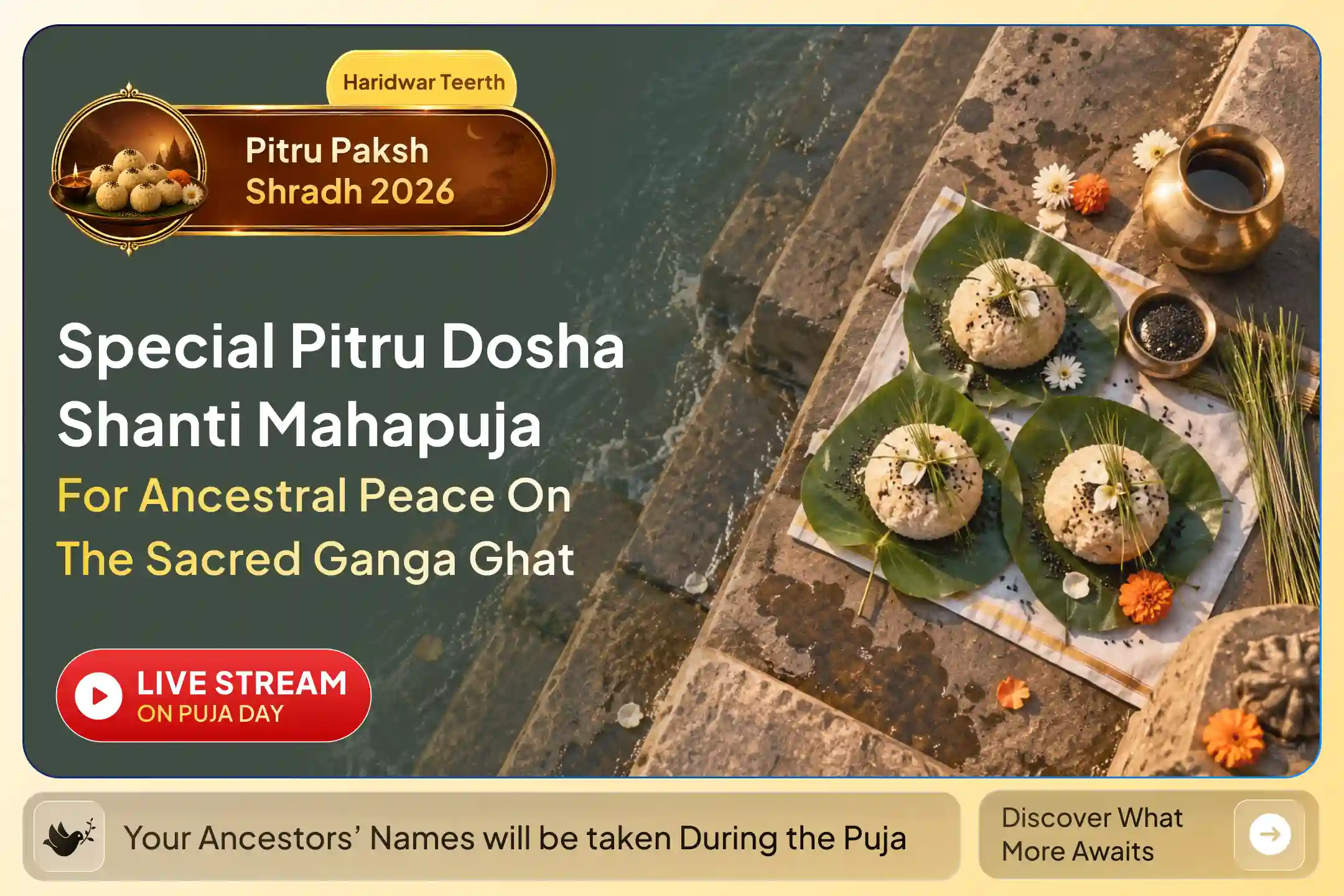
Instead of a one-day ritual, this special Anushthan continues for 15 consecutive days during Pitru Paksha, allowing continuous ancestral worship at one of India's most revered Pitru Tirths.Performed on the sacred banks of the Falgu River in Gaya, the Anushthan includes Shradh Pujan, Til Tarpan and Brahmin Bhojan, creating an extended period of remembrance and devotion for your ancestors.Through Sri Mandir, participate in this rare 15-day Pitru Anushthan at Gaya Tirth during Pitru Paksha and seek the blessings of your Pitrus for peace, well-being and prosperity.